Saturday, 26 September 2015

Energy 2050 Apocalypse - The Road to Exhaustion (Part 1)

Energy 2050 Apocalypse


World Energy to 2050
  Forty Years of Decline
By Paul Cherfurka
http://www.paulchefurka.ca/


Climbing the Ladder of Awareness


When it comes to our understanding of the unfolding global crisis, each of us seems to fit somewhere along a continuum of awareness that can be roughly divided into five stages:
  1. Dead asleep. At this stage there seem to be no fundamental problems, just some shortcomings in human organization, behaviour and morality that can be fixed with the proper attention to rule-making. People at this stage tend to live their lives happily, with occasional outbursts of annoyance around election times or the quarterly corporate earnings seasons.
  2. Awareness of one fundamental problem. Whether it's Climate Change, overpopulation, Peak Oil, chemical pollution, oceanic over-fishing, biodiversity loss, corporatism, economic instability or sociopolitical injustice, one problem seems to engage the attention completely. People at this stage tend to become ardent activists for their chosen cause. They tend to be very vocal about their personal issue, and blind to any others.
  3. Awareness of many problems. As people let in more evidence from different domains, the awareness of complexity begins to grow.  At this point a person worries about the prioritization of problems in terms of their immediacy and degree of impact. People at this stage may become reluctant to acknowledge new problems - for example, someone who is committed to fighting for social justice and against climate change may not recognize the problem of resource depletion.  They may feel that the problem space is already complex enough, and the addition of any new concerns will only dilute the effort that needs to be focused on solving the "highest priority" problem.
  4. Awareness of the interconnections between the many problems. The realization that a solution in one domain may worsen a problem in another marks the beginning of large-scale system-level thinking. It also marks the transition from thinking of the situation in terms of a set of problems to thinking of it in terms of a predicament. At this point the possibility that there may not be a solution begins to raise its head.

    People who arrive at this stage tend to withdraw into tight circles of like-minded individuals in order to trade insights and deepen their understanding of what's going on. These circles are necessarily small, both because personal dialogue is essential for this depth of exploration, and because there just aren't very many people who have arrived at this level of understanding.
  5. Awareness that the predicament encompasses all aspects of life.  This includes everything we do, how we do it, our relationships with each other, as well as our treatment of the rest of the biosphere and the physical planet. With this realization, the floodgates open, and no problem is exempt from consideration or acceptance. The very concept of a "Solution" is seen through, and cast aside as a waste of effort.
For those who arrive at Stage 5 there is a real risk that depression will set in. After all, we've learned throughout our lives that our hope for tomorrow lies in  our ability to solve problems today.  When no amount of human cleverness appears able to solve our predicament the possibility of hope can vanish like a the light of a candle flame, to be replaced by the suffocating darkness of despair.

How people cope with despair is of course deeply personal, but it seems to me there are two general routes people take to reconcile themselves with the situation.  These are not mutually exclusive, and most of us will operate out of some mix of the two.  I identify them here as general tendencies, because people seem to be drawn more to one or the other.  I call them the outer path and the inner path.


If one is inclined to choose the outer path, concerns about adaptation and local resilience move into the foreground, as exemplified by the Transition Network and Permaculture Movement. To those on the outer path, community-building and local sustainability initiatives will have great appeal.  Organized party politics seems to be less attractive to people at this stage, however.  Perhaps politics is seen as part of the problem, or perhaps it's just seen as a waste of effort when the real action will take place at the local level.

If one is disinclined to choose the outer path either because of temperament or circumstance, the inner path offers its own set of attractions.

Choosing the inner path involves re-framing the whole thing in terms of consciousness, self-awareness and/or some form of transcendent perception.  For someone on this path it is seen as an attempt to manifest Gandhi's message, "Become the change you wish to see in the world," on the most profoundly personal level.  This message is similarly expressed in the ancient Hermetic saying, "As above, so below." Or in plain language,  "In order to heal the world, first begin by healing yourself."


However, the inner path does not imply a "retreat into religion". Most of the people I've met who have chosen an inner path have as little use for traditional religion as their counterparts on the outer path have for traditional politics.  Organized religion is usually seen as part of the predicament rather than a valid response to it. Those who have arrived at this point have no interest in hiding from or easing the painful truth, rather they wish to create a coherent personal context for it. Personal spirituality of one sort or another often works for this, but organized religion rarely does.


It's worth mentioning that there is also the possibility of a serious personal difficulty at this point.  If someone cannot choose an outer path for whatever reasons, and is also resistant to the idea of inner growth or spirituality as a response the the crisis of an entire planet, then they are truly in a bind. There are few other doorways out of this depth of despair.  If one remains stuck here for an extended period of time, life can begin to seem awfully bleak, and violence against either the world or oneself may begin begin to seem like a reasonable option.  Keep a watchful eye on your own progress, and if you encounter someone else who may be in this state, please offer them a supportive ear.

From my observations, each successive stage contains roughly a tenth of the number people as the one before it. So while perhaps 90% of humanity is in Stage 1, less than one person in ten thousand will be at Stage 5 (and none of them are likely to be politicians).  The number of those who have chosen the inner path in Stage 5 also seems to be an order of magnitude smaller than the number who are on the outer path.

I happen to have chosen an inner path as my response to a Stage 5 awareness. It works well for me, but navigating this imminent (transition, shift, metamorphosis - call it what you will), will require all of us - no matter what our chosen paths - to cooperate on making wise decisions in difficult times.

Best wishes for a long, exciting and fulfilling  journey.

Bodhi Paul Chefurka


Next
Part 2: Introduction 

http://endofenergy.blogspot.ca/search?updated-max=2015-11-27T01:04:00-08:00&max-results=1&start=3&by-date=false

Sunday, 30 August 2015

Financial Advice Fails - As Everybody Becomes Poorer


Platinum Wealth Partners’ Insights

There are tipping point indicators in  any directions you care to explore. Stock markets are being crushed, economies are heading towards long slumps, Europe faces a migration crisis, technology doesn't help, and moreover - everyone is becoming poorer. 


A deeper look into these indicators and many more; suggests we are operating beyond the planet's physical capacities and the constraints imposed by limits to growth.

August 27, 2015


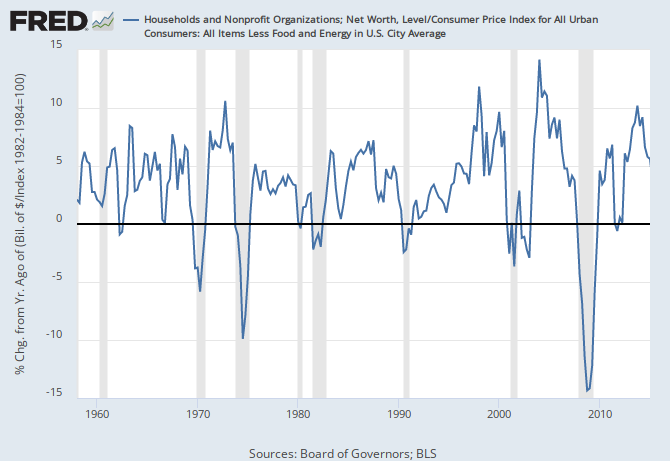
Real Household Net Worth:

 Look Out Below?


In my last post I pointed out that over the last half century, every time the year-over-year change in Real Household Net Worth went negative (real household wealth decreased), a recession had either started, or was about to.  (One bare exception: a tiny decline in Q4 2011, which looks rather like turbulence following The Big Whatever.) Throughout, click for source. - 


The problem: we don’t see this quarterly number until three+ months after the end of a quarter, when the Fed releases its Z.1 report for the the preceding quarter. The Q2 2015 report is due September 18.

But right now we might be able to roughly predict what we’re going to see four+ months from now, in the report on our current quarter, Q3, which ends September 30. We’re a bit over a month from the end the quarter, and we have some numbers to hand.

The U.S. equity markets are down roughly 7% year-over-year


South Africa's economy contracts, risk of recession grows


PRETORIA (Reuters) - South Africa's economy shrank for the first time in more than a year during the second quarter of 2015, raising the risk that labour disputes and slowing Chinese demand for commodities could push it towards recession.
The economic strain will inhibit the central bank from raising rates further to protect a weak currency and target inflation, while also torpedoing government efforts to keep deficits in check and protect its credit ratings.


Afghan migrants arrive on the Greek island of Kos after crossing from Turkey to Greece

A record 107,500 migrants crossed the EU borders last month to outstrip the previous monthly record in June of 70,000. During the first seven months there were nearly 340,000 migrants, up from 123,500 last year,


Warring Migrant Tribes, Grenade Attacks…What Is Going On In Sweden?

A Police officer secures on December 16,
if you bring intolerant people into your country this is what can happen


Not only how we deal with the world and make sense of it, or interact with each other, but also how we look at ourselves and understand our own nature, existence, and responsibilities. 
This is the IT version of my book The Great Field (available in Kindle books).


$2.1 Trillion Erased From U.S. Stocks In Six Days


The enormous losses reflect the deep fears gripping markets about how the world economy will fare amid a deepening economic slowdown in China.

The Dow, S&P 500 and Nasdaq have all tumbled into correction territory, their first such 10% decline from a recent high since 2011.
The S&P 500 -- the best barometer for the biggest U.S. companies -- has lost trillions of market value in the six-day selloff through Tuesday, according to S&P Dow Jones Indices.
To put those losses into perspective, that's roughly equal to the combined market value of these corporate titans put together:
 Apple (AAPL, Tech30), Google(GOOGL, Tech30), Berkshire Hathaway (BRKA), ExxonMobil (XOM), Facebook (FB, Tech30), Walmart(WMT) and 21st Century Fox (FOXA).


Originally Published 

Thursday, 27 August 2015

Greenspan Warns Exuberant " Bond Bubble To Bust" & More Top Insights

Greenspan warns about bond-market bubble


: Former Federal Reserve Chairman Alan Greenspan is sounding the alarm about a bubble that he believes is forming in the bond market.
In two television interviews in recent days, Greenspan said interest rates could shoot higher and derail the economy when the bubble bursts.
The former Fed chairman says the current situation in the bond market is comparable to what happens in the stock market during an equity bubble.
Noting that stock-market bubbles are typically characterized by extreme price-to-earnings ratios, Greenspan said extremely low yields are telling a similar tale for bonds.
“If you turn the bond market around and you look at the price of bonds relative to the interest received by those bonds, that looks very much like the usual spread which would concern us if it were equities, and we should be concerned,” Greenspan said in an interview with Fox Business Network.


There are China analysts, and then there is Charlene Chu.
She has been called a rock star of Chinese-debt analysis. Money managers the world over pay tens of thousands of dollars for access to her research at her new firm Autonomous Research. Her reports are rarely leaked, and she rarely gives interviews.

Business Insider got a glimpse at a massive report she wrote at the end of July.

This was when everyone was freaking out about the precipitous fall of China's stock markets, and it predates the Chinese authorities' decision to devalue the yuan.

Her base case in the report was for Chinese authorities to maintain stability of the equity market and forestall contagion.There is also a doomsday scenario, however, in which there is contagion to other domestic and international markets, large capital outflows, and an acceleration of problems associated with financial-sector weakness and corporate indebtedness.

The report said: "This in turn would likely lead to a significant pullback in credit, putting the brakes on GDP growth and bringing an end to China's decades of stellar economic growth. At that point, social and political stability — the critical wild cards in this equation — could come under question."

This is what doom looks like


Growth in OPEC’s biggest exporter will slow to 2.8 percent this year and 2.4 percent in 2016 after oil prices slumped, the Washington-based IMF said in a statement on Monday. If spending isn’t curbed, its fiscal deficit would be “very large” this year and over the medium term, it added.


“Moody’s isn’t the only one predicting that growth will be slow to rebound,” said Ari Santos, a trader at Sao Paulo-based brokerage H.Commcor. “Looking forward, we’ll have a stagnant economy, with no growth and no outlook to grow.”


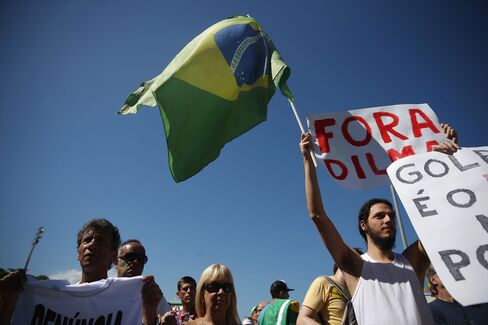
Protesters calling for the impeachment of President Dilma Rousseff march along Copacabana beach on Aug. 16, 2015.
In the midst of its deepest economic and political crisis in a generation, Brazil is contending with a business climate so punishing that major projects across numerous sectors are being frozen or shrunk, while small businesses slash prices and shift focus.


Singapore-based wealth managers, already under pressure from a global move towards tax information sharing, face a more immediate threat as Asian countries including Indonesia and India look to chase undeclared money in the low-tax city state. A global crackdown on tax evasion launched during the 2008 financial crisis has already forced Switzerland and other European offshore hubs to surrender their prized bank secrecy.


The combined deficit of private sector DB schemes in the UK

 now stands at around £900 billion, up from £250 billion

 since the start of the millennium, despite companies pouring

 in £500 billion towards pension saving over that time.

 According to Hymans Robertson, the stark figures highlight

 that for too long pension schemes have been taking too 

much risks


Originally Published

 Investors' Insights 

http://pwa2100.blogspot.ca/2015/08/greenspan-warns-exuberant-bond-bubble.html

Sunday, 16 August 2015

Since 2000 Real GDP Grew 31.6%, But Wages Are Flat?

Platinum Wealth Advisors
 Comments


Markets were momentary inspired by Buffet’s latest blockbuster deal  and shenanigans that turned over the downward sentiment of the past seven trading-sessions. But the old guy in Omaha is not the world, and the real world could actually care less about what Berkshire did, does, or doesn’t do. Markets, however, being collectively neurotic by nature, care for short time spurts -   that is until the next trendy thought or event captures its child-like focus and limited imagination – thus the game goes on..   

A brief review of the real world concludes that there is little to be exuberant about. In addition to Greece,Spain, Italy and perhaps the rest of the Eurozone, along with other nations, all account for many top Western economies who are  in critical distress. Some are near terminal. Meanwhile, bad debt at Chinese banks continues to accelerate, as expected, Resource economies are seeing exports drop for commodities. Australia’s  coal industry is now on the watch list ; so is Norway’s oil industry.  Bonds for the Eurozone are now paying negative returns, indicating that there are no “Real Economy “investments for notional capital. Japan’s consumer confidence is dropping faster than a hockey’s player’s gloves in a big-game  fight , each month. Russia’s GDP fell sharply, by 4.5%; it is getting hammered by both sanctions and resource issues. Taiwan too is lowering market yields. Brazil, Venezuela, Mexico, and no doubt many more South and Central American countries, are basket-cases. Then there is the Ukraineand its Slovak and Eastern European neighbours, who are all experiencing hardships.

 Still, an even  bigger concern are countries in the Middle East, South Asia and Africa, where the economic optics are limited, distorted or non- existent, but one may conclude with confidence that given  the extent of wars, starvation, medical deprivation and extra-ordinary waves of migration to less-marginal neighbouring countries, that most of these economies are also terminal cases with little hope of recovery to  sustainable levels for their indigenous populations. Overpopulation is thus rampant everywhere.

In the meantime, most folks in North America are getting poorer, since 2000,  as “The Tale Of Two Charts” ndicates below - and more importantly, they do not participate at all in the real GDP growth. It looks  much worse too, as per capita incomes are going backwards while  drowning in the temporary relief from more debt at all levels, to keep a broken  consumer  consumption system hobbling along. Pensions and medical services are also in peril in both  developing and developed countries.

So indeed, markets may be neurotically happy for a brief moment enjoying  the usual relief reactions, despite what is plain and clear to object analysis and evaluation. Meaning, the iceberg’s damage has but one inescapable conclusion – so what the heck, why not rearrange the deck chairs with Uncle Warren, while having the ship’s band play merrily along - once more?

Knowing that in the end, reality is a cruel mistress - who promises wide-spread currency wars (devaluations –  already China, Japan, Australia are suspects…), and trade protectionism with its consequential and expanding global conflicts!


Good Luck; Be Careful Out There!


Where Did the GDP "Growth" Go? Not into Wages


How can the economy grow by roughly one-third in real dollars while real median household income drops like a rock?
Based on gross domestic product (GDP), the U.S. economy has grown smartly since 2000: GDP rose from 10,031 in 2000 to 17,840 in mid-2015. That's an increase of 77.8%.

A Tale of Two Charts


Ironically - the same old French story - Storm the Bastille?


The Permian Basin in West Texas remains one of the few bright spots compared to other shale basins in North America. Drilling there is still profitable, with low costs and existing infrastructure. A series of pipelines have come online in West Texas over the past year, eliminating the discount that Permian oil traded at compared to the WTI benchmark. The Wall Street Journal notes that RSP Permian (NYSE: RSPP), a Permian driller, successfully sold new equity, a sign that investors are still keen on drillers in the basin. RSP sought to raise funds to complete acquisitions and the company raised $157.5 million by selling new stock this week. There is a lot of speculation about when and to what extent lenders and equity investors will pull out of the shale sector, but RSP’s successful offering demonstrates that there is still an appetite for shale companies among investors.


  With just one model on sale to support all its R&D, it's understandable why a share sale might be on the horizon. When you look at Tesla's finances the same way that GM and Ford report theirs (generally accepted accounting principles, or GAAP), the company lost nearly $15,000 per car this last quarter. Although Tesla says this number is more than covered by income from EVs it leases direct to customers, designing and developing cars is neither cheap nor simple, and the company will need cash to grow into a multiple-model lineup.


Farmer Ryan Rogers checks on a generator at Homestead Dairy in Plymouth, Indiana, which invested in a biogas recovery system whiThe Environmental Protection Agency estimates that more than three million tons of greenhouse gas emissions were eliminated last year by Homestead and the 246 other US livestock farms which have installed biogas recovery systems.
That's equivalent to taking more than 630,000 cars off the road.


The Mongstad oil and gas refinery, part-owned by Statoil ASA, is near Bergen, Norway.
Oil is losing value just as investments in the petroleum industry are heading for the biggest drop since 2000. To cope with the shift, companies such as Statoil ASA started restraining spending more than six months before Brent crude started to tumble.


As Economic Malaise Grows, Brazil 

Budget Deficit Hits All Time Record

June’s result means that the government's budget deficit reached a record breaking 8.1% of GDP -- one of the highest across emerging and developed economies and the highest in Brazil since the beginning of current data in 1995.


Learning Success: 

APPLY Tips From The Best


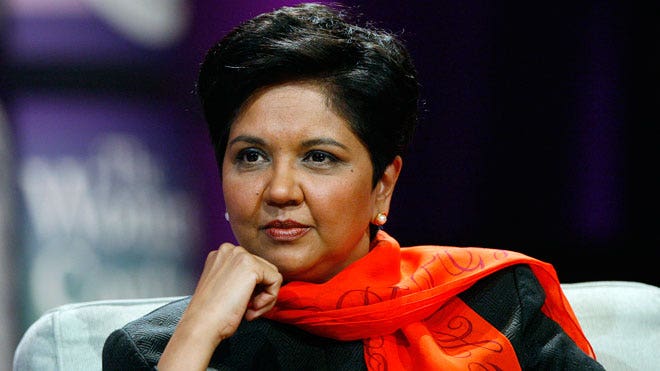
Indra Nooyi,  PepsiCo , another of  100 Most Powerful Women - Forbes, has not only led her company to record financial results but is making strides to move PepsiCo in a healthier direction, leading the courageous charge to shed traditional fast food properties and to replace them with initiatives to supply healthier foods. She is deeply caring and committed as a senior executive. She is a fun-loving executive as well—she played lead guitar for an all-woman rock band in college, loved to play cricket, and is known to sing karaoke and perform at corporate gatherings to this day. Yes, I have been known to relate to her fun-loving spirit as a senior executive as well.


Originally Published

Platinum Wealth Partners

http://pwa2000.blogspot.ca/2015/08/since-2000-real-gdp-grew-316-but-wages.html